
Jaali Screens and Brass Accents for Modern Homes: Timeless Style for Apartments
A modern apartment can look polished and still feel a little flat. Smooth walls, modular storage, clean flooring, neat lighting, all useful, but sometimes missing warmth. That’s where jaali screens and brass accents can quietly change the whole mood.
Jaali has a long history in Indian architecture, from carved stone windows to timber latticework that softened heat, light, and views. Brass brings its own sense of age and craft, with a glow that feels warmer than chrome or steel. Used well, they don’t make a home look “traditional” in a heavy way. They help modern rooms feel layered, lived-in, and personal.
For apartments, they’re especially practical. A jaali screen can divide space without blocking light. Brass can lift a simple cabinet, doorway, or console without taking over the room. Together, they blend tradition with contemporary design in a way that suits compact city homes, including apartments in Pune neighbourhoods such as Baner, Aundh, Kharadi, Balewadi, and Wakad.

Why jaali works so well in apartments
Apartment living often means one room has to do several jobs. The living area may open into the dining space. A foyer may be almost non-existent. A bedroom might need a work corner. Full walls can make these spaces feel boxed in, but leaving everything open can feel exposed.
A jaali screen sits beautifully between those two extremes.
It filters light instead of blocking it
One of the biggest benefits of jaali is how it handles light. A solid partition stops daylight. Glass lets everything through, including glare. A jaali screen breaks light into softer patterns, which can make a room feel calmer and more textured.
This works especially well near:
Balconies where sunlight enters strongly
Living and dining zones that share one window
Prayer corners that need a gentle sense of separation
Bedroom seating nooks where privacy matters but darkness doesn’t
In a compact flat, filtered light helps the room breathe. It also adds movement during the day as the shadows shift across the floor and walls.
It allows airflow
Jaali screens were never just decorative. Their open patterns help air pass through, which matters in apartments where cross-ventilation can be limited.
A full-height solid partition between a living room and dining area can trap heat or make one side feel stuffy. A jaali partition gives visual separation while keeping air moving. Near windows or balcony doors, it can soften views without making the room feel sealed.
For homes in warmer cities, this balance is useful. You can define zones and still keep the apartment comfortable.
It creates privacy without heaviness
Privacy is tricky in apartments. The main door may open straight into the living room. A bedroom door may be visible from the seating area. A balcony may face another building.
A jaali screen can hide direct sightlines while still feeling open. For example, a slim jaali panel near the entrance can create a small foyer effect. It gives guests a pause before the living room opens up.
In bedrooms, a jaali panel can separate a dressing corner or study desk. In studio-style layouts, a movable screen can add privacy when needed, then fold away when not.
The best jaali designs do two things at once: they solve a space problem and add character without shouting for attention.
Get the scale of the motif right
Jaali screens can look stunning or overwhelming depending on scale. The motif, which means the size and spacing of the pattern, should match the room, the viewing distance, and the purpose of the screen.
A pattern that looks beautiful on a large villa facade may feel too busy in a compact apartment hallway. A tiny lattice that works on a cabinet shutter may disappear when used as a full-height partition.
Large motifs suit bigger surfaces
For living rooms, dining dividers, and balcony-facing panels, bigger motifs usually work better. They feel more contemporary and less cluttered. Large geometric cut-outs also allow more light and airflow, which keeps the screen from feeling too dense.
A large-scale jaali works well when:
The panel runs from floor to ceiling
The room has enough distance to view it properly
The rest of the furniture is simple
The screen is used as a main design feature
Think of patterns with generous spacing, clean geometry, and enough open area. The idea is to create rhythm, not visual noise.
Smaller motifs work for intimate areas
Smaller jaali patterns can feel detailed and cosy. They suit areas where the panel is closer to eye level or used in smaller portions.
Use finer motifs for:
Cabinet shutters
Mandir back panels
Wardrobe inserts
Niche doors
Window screens
Bedside feature panels
In these spots, the detail feels intentional because you see it up close. The smaller scale also adds a handcrafted feel without dominating the whole room.
Match the motif to the room style
Geometric jaali patterns tend to look cleaner and more modern. Floral or arched motifs feel more traditional. Both can work, but they need the right surroundings.
If the apartment has sleek furniture, neutral fabrics, and straight lines, a geometric jaali can fit naturally. If the home has carved furniture, patterned rugs, or heritage-inspired artwork, a softer traditional motif may feel right.
The safest route for most modern apartments is a simplified traditional pattern. It gives you the charm of jaali without making the space feel themed.

Brass and wood add warmth without clutter
There’s a reason brass and wood often look so good together. Wood brings grain, depth, and quiet comfort. Brass adds glow. When paired with jaali, the result feels rich but not fussy.
This is where jaali screens and brass accents in modern homes can really shine. The combination works because both materials have warmth, but they express it differently. Wood feels grounded. Brass catches light.
Where brass accents work best
Brass doesn’t need to cover large surfaces to make an impact. In fact, it often looks better in smaller, well-placed details.
Good places to use brass include:
Handles on storage units near a jaali partition
Thin inlay lines on a wooden screen frame
Wall sconces beside a jaali feature
Legs or edges on a console table
Mirror frames in an entryway
Small decor pieces on open shelves
The trick is to repeat brass in two or three places. That makes it feel planned. If brass appears only once, it may look random. If it appears everywhere, it can feel too shiny.
Choose the right brass finish
Not all brass has the same effect. Polished brass looks brighter and more formal. Brushed or antique brass feels softer and easier to use in everyday homes.
For apartments, brushed brass is usually the most forgiving. It hides minor marks better and pairs well with matte walls, wood finishes, and fabric upholstery. Antique brass works beautifully if the home already has warm colours, textured walls, or traditional elements.
Bright polished brass can still work, but use it carefully. A little shine on a handle, pendant light, or tray can look elegant. Large glossy brass surfaces may feel too loud in a small room.
Wood tone makes a big difference
Brass pairs well with medium to dark wood tones. Walnut, teak-like finishes, and warm oak shades make brass look settled. Very pale wood can also work, but the contrast feels more Scandinavian than Indian contemporary.
If the jaali is the main feature, keep the surrounding wood finish consistent. A wooden jaali, a console, and a TV unit don’t need to match exactly, but they should feel related. Too many wood tones can make the room look patchy.
A helpful rule is to choose one main wood tone, then use brass as the connecting accent.
Fixed partitions or movable screens both have their place
A jaali screen can be built into the home, or it can stand as a flexible piece. The right choice depends on how permanent the need is.
Fixed partitions
Best for entryways, living and dining dividers, mandir zones, and long-term layouts. They look integrated and can include lighting, storage, or a matching frame.
Movable screens
Best for rented homes, studio apartments, flexible work corners, and bedrooms. They can shift when the room needs to change.
When a fixed jaali partition makes sense
Choose a fixed partition if you know the layout won’t change. For example, a foyer screen near the entrance is usually worth building in. So is a living and dining divider if both zones are clearly placed.
Fixed partitions look cleaner because they can be aligned with the ceiling, flooring, and furniture. They can also hide wiring for lights or support small shelves if planned well.
They’re a good choice when you want the jaali to feel like architecture, not furniture.
When a movable screen is smarter
Movable screens work well when flexibility matters. In rental apartments, they bring style without major civil work. In compact homes, they can create a work-from-home corner during the day and move aside in the evening.
A folding jaali screen can also soften a bedroom corner, hide a drying rack, or create a temporary dressing zone. Look for stable frames and safe edges, especially in homes with children or pets.
The trade-off is that movable screens need floor space. They also suit lighter patterns better than heavy, dense panels.
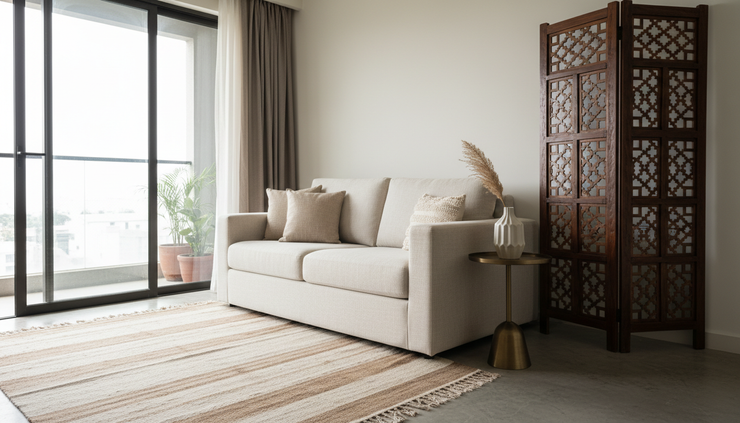
Keep ornate jaali balanced with simple styling
Jaali already has pattern. Brass already has shine. If everything else in the room competes, the space can start to feel busy. The goal is balance.
Let the jaali be the feature
If the jaali screen has a strong pattern, keep nearby furniture simple. Choose clean sofa shapes, plain upholstery, and uncluttered surfaces. This gives the eye a place to rest.
For example, a detailed wooden jaali behind a dining bench looks best with a plain table, simple chairs, and soft lighting. Add one brass pendant or wall light, not three competing statement pieces.
Use a calmer colour palette
Warm neutrals work beautifully with wood and brass. Think ivory, sand, taupe, clay, olive, charcoal, and muted terracotta. These colours support the materials rather than fight them.
If you love colour, bring it in through cushions, art, or rugs. Keep the larger pieces quieter. That way, the jaali remains timeless even if you refresh the decor later.
Keep patterns under control
A patterned jaali with a patterned rug, patterned curtains, and carved furniture can feel crowded. Pick one main pattern, then let the others stay subtle.
A simple mix could be:
Geometric jaali as the main pattern
Plain curtains in a textured fabric
Solid sofa upholstery
One rug with a soft border or low-contrast design
Brass accents repeated in small touches
This approach works especially well in apartments because visual calm can make rooms feel bigger.
Add lighting that brings out the detail
Jaali looks best when light passes through it or grazes across it. Warm wall lights, concealed strips, or pendant lights can highlight the pattern in the evening.
Avoid harsh white lighting near brass. It can make the metal look cold. Warm white light gives brass a softer glow and makes wood feel richer.
For mandir areas, entry screens, and dining partitions, backlighting can look lovely. Just keep it gentle. The light should reveal the jaali, not turn it into a showroom display.
Maintenance keeps brass and wood looking good
Jaali screens and brass accents are not difficult to care for, but they do need the right habits. Dust and moisture are the main things to manage.
Cleaning brass finishes
Brass develops a natural patina over time. Some people love that aged look. Others prefer a cleaner shine. Before cleaning, check whether the brass is lacquered. Lacquered brass has a protective coating and should be wiped gently, not scrubbed.
Simple care tips:
Use a soft, dry cloth for regular dusting.
Wipe fingerprints with a slightly damp microfibre cloth, then dry at once.
Avoid rough scrub pads because they can scratch the surface.
Keep harsh cleaners away from brass, especially on coated finishes.
For uncoated brass, use a gentle brass-safe cleaning method only when needed.
Moisture can mark brass, so don’t leave wet cloths or water droplets sitting on it.
Caring for wooden jaali screens
Wooden jaali needs dusting because the cut-outs can collect fine particles. A soft brush, feather duster, or vacuum brush attachment can help reach the inner edges.
For wood finishes:
Dust regularly so grime doesn’t settle into the pattern.
Use a barely damp cloth for light cleaning, then dry immediately.
Keep strong sunlight from hitting the same spot all day if possible.
Avoid placing indoor planters where water can spill onto the frame.
Refresh polish or protective coating when the finish starts looking dry.
In kitchens or near balconies, choose finishes that can handle more dust and humidity. A good sealant makes cleaning much easier.
Watch the joints and edges
Jaali panels have more edges than a plain board. That’s part of their charm, but it also means craftsmanship matters. Poorly finished edges can catch dust, chip faster, or feel rough to touch.
For fixed partitions, make sure the frame is sturdy and well anchored. For movable screens, check hinges and legs from time to time. A beautiful screen should also feel safe and solid in daily use.
FAQ
Are jaali screens suitable for small apartments?
Yes, if the pattern and placement are chosen carefully. Use open motifs, slim frames, and lighter wood tones where space is tight. A jaali near the entrance or between living and dining areas can create privacy without closing the room.
Do jaali screens reduce natural light?
They filter light rather than fully blocking it. The amount of light depends on the density of the pattern. Larger cut-outs allow more daylight, while finer motifs create more privacy and shadow.
Is brass hard to maintain in everyday homes?
Brass is easy to maintain if you wipe it regularly and keep moisture away. Brushed and antique finishes are more forgiving than high-polish brass because small marks are less visible.
Can jaali work in a rented apartment?
Yes. A freestanding or folding jaali screen is a good option for rented homes. It adds privacy and style without permanent changes.
What furniture works best with ornate jaali?
Simple furniture works best. Choose clean lines, plain fabrics, and fewer decorative pieces. Let the jaali carry the pattern, then use brass, wood, and soft lighting to support it.
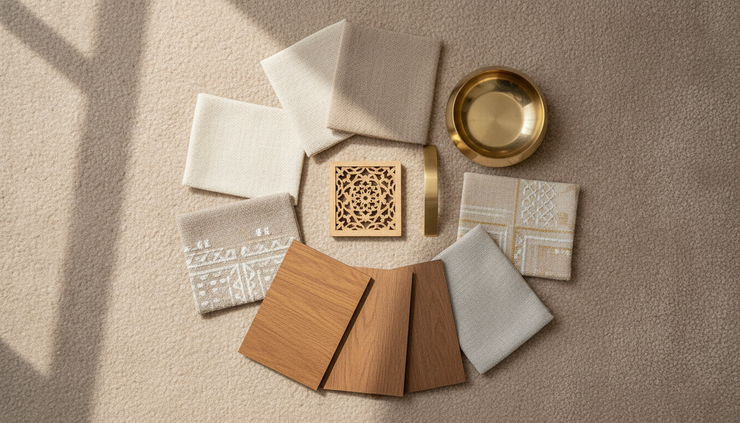
A timeless detail for modern living
Jaali screens and brass accents work because they offer more than surface decoration. They solve real apartment problems: privacy, airflow, filtered light, flexible zoning, and visual warmth. At the same time, they bring in a sense of craft that modern interiors often need.
The key is restraint. Choose the right motif scale. Pair brass with warm wood. Keep furniture simple. Repeat accents thoughtfully. Maintain the finishes with regular, gentle care.
If you’re planning a new home or refreshing an apartment, speak with Verb Interior about designing jaali screens and brass accents for your space.
A well-placed jaali screen can make a room feel softer in the morning, more private in the evening, and more beautiful every day in between. Add brass in the right measure, and the home gains that quiet glow that never really goes out of style.


