
Two Tone Kitchen Cabinets for Small Indian Homes Stylish Smart Space Saving Ideas
Small Indian kitchens work hard. They handle tadka, tea, pressure cooking, lunch boxes, festival prep, and daily cleaning. A single flat colour can look plain. Too many finishes can look busy. Two-tone cabinets solve both problems when the colours are placed with care.
The idea is simple. Use one colour for the lower cabinets and another for the wall cabinets, tall units, or open shelves. This creates contrast without adding extra items. It also helps a compact kitchen feel planned, not packed.

Why two-tone cabinets work well in compact Indian kitchens
Two-tone kitchens are not only about style. They also make daily use easier.
They add visual interest without clutter.
A small kitchen cannot handle too many display pieces, heavy patterns, or bulky decor. Colour does the work instead. A deep shade on the base cabinets creates depth. A lighter shade on the top keeps the room from closing in.
They hide stains where stains happen most.
Lower cabinets face splashes, dust from the floor, oil marks, and wet hands. Darker colours such as charcoal, walnut brown, bottle green, or deep blue hide daily marks better than pale shades.
They help define zones.
Colour blocking can guide the eye. For example, a tall pantry in a darker colour can mark the storage zone. A lighter run above the counter can make the cooking zone feel cleaner.
They make budget choices look designed.
Even simple shutters can look premium when the colour split is balanced. The trick is to use fewer shades and repeat them in small details. Handles, shelves, skirting, and backsplash tones should feel connected.
They suit Indian cooking habits.
A two-tone layout lets the hard-working areas stay forgiving. The top cabinets can still stay bright. This keeps the kitchen fresh without making every surface high-maintenance.
A good rule is this: keep the heavier colour lower and the lighter colour higher. It works in most small flats, including narrow kitchens, open kitchens, and compact L-shaped kitchens.
Plan the layout first, then choose colour
Colour looks best when it supports the layout. In small Indian homes, the wrong colour placement can make a kitchen feel chopped up. Start with the cabinet shape and storage needs.
Use darker colour below the counter
This is the safest two-tone plan. Use a deeper shade for base cabinets and a lighter shade for wall cabinets. It grounds the kitchen and hides stains near the floor.
Good for:
Straight kitchens in studio flats
Small L-shaped kitchens
Homes where the counter gets heavy daily use
Families that cook with oil, spices, and strong masalas
This is one of the most practical two-tone kitchen cabinet ideas because it balances style with daily cleaning.
Keep wall cabinets light and simple
Wall cabinets sit at eye level. If they are too dark, they can make the room feel smaller. Choose white, cream, warm beige, light grey, or pale wood for upper units.
Avoid heavy patterns on upper cabinets. Strong grains, glossy dark colours, and busy handles can create visual noise.
For very small kitchens, choose plain shutters on top. Add character below.
Colour block tall units with care
Many compact homes need a tall pantry or a tall unit for appliances. Paint or finish this tall section in the darker shade only if it sits at one end of the kitchen. This frames the layout.
If the tall unit is in the middle, keep it light. A dark block in the centre can break the flow and make the room feel narrow.
Match the open kitchen to the living area
In many Pune flats and newer Indian apartments, the kitchen opens into the living or dining space. In that case, the two colours should not fight with the rest of the room.
Use one cabinet colour that repeats in the living area. For example:
Walnut lower cabinets with a walnut TV unit
Sage overhead cabinets with soft green cushions
Cream upper cabinets with cream walls
Charcoal base cabinets with black window frames or light fittings
This creates a curated look without adding decor.

The best colour pairings for small Indian homes
The best colour pairings hide marks, reflect light, and age well. Avoid very loud contrasts in compact kitchens. They can tire the eye. Choose one calm colour and one deeper colour.
Colour pairing | Why it works | Best use |
Cream and walnut brown | Warm, classic, and forgiving | Family kitchens and open kitchens |
Light grey and charcoal | Clean and modern | Narrow straight kitchens |
Sage green and warm white | Soft but fresh | Kitchens with good natural light |
Sand beige and deep blue | Stylish without looking loud | L-shaped kitchens |
Pale wood and graphite | Balanced and easy to style | Compact flats with modern furniture |
Off-white and bottle green | Rich but not flashy | Kitchens with brass or black handles |
Taupe and coffee brown | Hides dust and stains well | High-use kitchens |
Cream and walnut brown feels warm
This combination works in Indian homes because it pairs well with steel utensils, stone counters, and warm lighting. Use walnut brown below and cream above. Add a light backsplash to stop the darker base from feeling heavy.
Best with:
Light stone counters
Beige or cream floor tiles
Simple handles in steel, black, or muted gold
Light grey and charcoal looks clean
Grey is a strong choice for small kitchens because it handles dust better than pure white. Charcoal base cabinets hide marks well. Light grey upper cabinets keep the room calm.
To avoid a cold look, add a wood shelf or a warm-toned backsplash.
Sage green and warm white adds character
Sage green gives colour without shouting. Use it on lower cabinets or a tall pantry. Pair it with warm white overhead cabinets. This combination suits homes with plants, wooden dining furniture, or neutral walls.
Avoid bright green in small kitchens. It can look harsh under tube lights.
Beige and deep blue feels curated
Deep blue can be elegant, but use it with restraint. Keep it below the counter. Pair it with sand beige or soft white on top.
This pairing works well when the kitchen is visible from the living room. It looks planned and grown-up.
Off-white and bottle green hides more than expected
Bottle green lower cabinets are practical in Indian kitchens. They hide oil smudges and minor stains better than pale colours. Off-white upper cabinets keep the kitchen airy.
Use a simple backsplash. Let the cabinet colours be the main feature.
Materials and finishes that stay easy to maintain
Colour is only one part of the choice. The finish decides how hard the kitchen is to clean. Indian kitchens need surfaces that handle steam, splashes, and frequent wiping.
Choose laminate for low-maintenance shutters
Laminate is a practical choice for everyday kitchens. It comes in many colours and finishes. It also handles regular wiping well when installed properly.
For small kitchens, choose matte or soft sheen finishes. They reflect enough light but do not show every fingerprint.
Good choices include:
Matte laminate for darker lower cabinets
Soft sheen laminate for upper cabinets
Wood-look laminate for warmth
Plain laminate for a clean, uncluttered look
Use acrylic-look finishes only where fingerprints are manageable
Glossy finishes can make a small kitchen look brighter. They also show fingerprints, water marks, and smudges faster. If you like a glossy look, use it on upper cabinets rather than lower ones.
Keep darker glossy shutters away from the cooking area. They need more wiping.
Pick plywood for strength
Plywood is a common cabinet base material in Indian homes. It works well when the edges are sealed and the shutters are finished properly. It is a good option for kitchens that see daily cooking.
Ask for proper edge finishing. Open or rough edges collect grime and moisture.
Keep the counter and backsplash simple
Two-tone cabinets already create contrast. The counter and backsplash should not compete with them.
Safe choices include:
Plain light stone look
Soft beige tiles
White or off-white tiles
Subtle grey surfaces
Small patterned tiles only in one limited section
If the lower cabinets are dark, keep the counter lighter. If the cabinets use wood tones, avoid a very busy backsplash.

Smart storage that supports the two-tone look
Storage should feel like part of the design, not an afterthought. In a small kitchen, every visible line matters. A two-tone plan can help hide storage and reduce clutter.
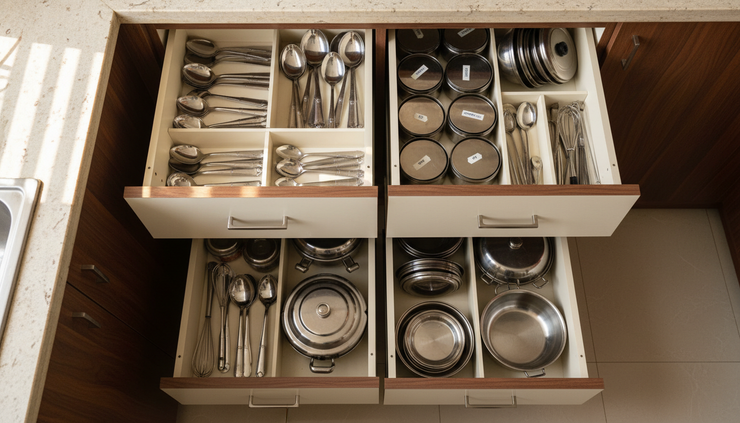
Use deep drawers below the counter
Drawers work better than deep shelves for many items. They bring pots, pans, lids, and boxes forward. This reduces bending and searching.
Use the darker cabinet colour on these drawers. It keeps the base strong and practical.
Best items for lower drawers:
Cookware
Tiffin boxes
Heavy jars
Pressure cookers
Large plates
Cleaning supplies in a closed section
Add tall storage at one end
A tall pantry can hold dry groceries, appliances, and extra vessels. In a small kitchen, this prevents items from crowding the counter.
Make the tall unit match either the lower cabinet colour or a soft wood tone. If the kitchen is very narrow, use the lighter shade.
Keep open shelves limited
Open shelves look good, but they collect dust and oil in Indian kitchens. Use them in small doses.
Good places for open shelves:
Near the dining side of an open kitchen
Above the sink, away from the hob
At the end of a wall cabinet run
For daily cups or a few jars only
Match the shelf colour to the lower cabinets or the countertop. This keeps the design connected.
Hide appliances where possible
Small counters get crowded fast. Plan a place for the mixer, toaster, water purifier, and daily utensils. A two-tone cabinet scheme looks best when the counter stays mostly clear.
Simple ideas that help:
A closed appliance cabinet with a lift-up shutter
A corner shelf for the mixer
A narrow pull-out for oil bottles and spices
A wall-mounted rail near the cooking area
A drawer with dividers for spoons and tools
Avoid filling every wall with cabinets. Leave some breathing space near a window or dining edge.
Repeat colour inside useful details
Small design repeats make the kitchen feel finished. Pick up the darker cabinet colour in one or two places.
For example:
A matching skirting below the base cabinets
A dark frame around a tall unit
A shelf in the same wood tone as the base
Handles that match across both colours
A backsplash line that connects the upper and lower palette
This is how a small kitchen gains character without clutter.
Common mistakes to avoid
Two-tone cabinets fail when there are too many ideas in one small room. Keep the plan tight.
Avoid these choices:
Three or more cabinet colours in a small kitchen
Dark upper cabinets in a narrow space
Busy backsplash with strong cabinet contrast
Dark glossy shutters near the hob
Large handles on every small drawer
Open shelves above the cooking zone
Different wood tones that do not match
Pure white lower cabinets in a heavy-use kitchen
Also check the lighting before finalising colours. A shade that looks soft in a showroom may look dull at home. Test samples in morning light and evening light. Indian kitchens often use bright white lighting, warm lighting, or a mix of both. Colour changes under each one.
A simple plan that works in most small kitchens
Here is a reliable starting point for compact Indian flats:
Use a darker colour below the counter.
Use a light colour for wall cabinets.
Keep the countertop light and plain.
Use one backsplash style.
Choose matte or soft sheen finishes.
Add tall storage at one end.
Keep handles slim and consistent.
Limit open shelves to one small area.
Repeat the darker colour in one detail.
This plan suits many kitchen sizes. It also leaves room for personal taste. Change the colours, but keep the balance.
If the kitchen has poor natural light, choose cream, beige, pale wood, or light grey for the top. If the kitchen is open to the living room, choose colours that match the wider home. If cooking is heavy, make the base as stain-friendly as possible.
For more design help and kitchen planning ideas, explore custom kitchen interior solutions that suit compact Indian homes.
FAQs
Are two-tone cabinets good for small kitchens?
Yes. They add contrast without adding clutter. A darker base and lighter upper cabinets can make a small kitchen feel balanced and more open.
Which cabinet colour hides stains best?
Deep shades such as charcoal, walnut brown, bottle green, coffee brown, and deep blue hide stains better than white or pale beige. Use them on lower cabinets for best results.
Should upper cabinets be lighter than lower cabinets?
In most small kitchens, yes. Light upper cabinets make the space feel taller and brighter. Dark lower cabinets handle daily wear better.
What finish is easiest to clean in an Indian kitchen?
Matte or soft sheen laminate is easy to maintain for most homes. It handles daily wiping well and does not show fingerprints as much as high-gloss finishes.
Can I use open shelves in a two-tone kitchen?
Yes, but keep them limited. Use open shelves away from the hob. Match them to one cabinet colour so they look planned, not random.
Two-tone cabinets work best when they solve real problems. Let the darker colour handle stains. Let the lighter colour open up the space. Keep storage closed, finishes simple, and colour blocks clear. The result is a small kitchen that feels stylish, calm, and ready for daily Indian cooking.


